The Birth of IQ
1800
The Origins of IQ Testing
The Need for Intelligence Testing (Late 19th Century)
The Need for Intelligence Testing (Late 19th Century)
Before IQ tests, intelligence was an abstract idea. In the 1800s, scientists began to explore ways to measure human cognitive ability. Francis Galton (1822-1911), a British scientist, was one of the first to suggest that intelligence was hereditary. He attempted to measure intelligence using reaction time and sensory skills, but his methods were flawed.
Intelligence is more than just physical reflexes—it involves reasoning, problem-solving, and memory.
1904-1905
The First Official IQ Test (1904-1905)
Alfred Binet & the Binet-Simon Scale
Alfred Binet & the Binet-Simon Scale
In 1904, the French government asked psychologist Alfred Binet to develop a test to identify students needing extra help in school. Binet and his colleague Théodore Simon created the first IQ test in 1905—the Binet-Simon Scale.
How it worked:
- Focused on memory, attention, and problem-solving
- Compared a child's mental age to their actual age
- Used for educational purposes, not ranking intelligence
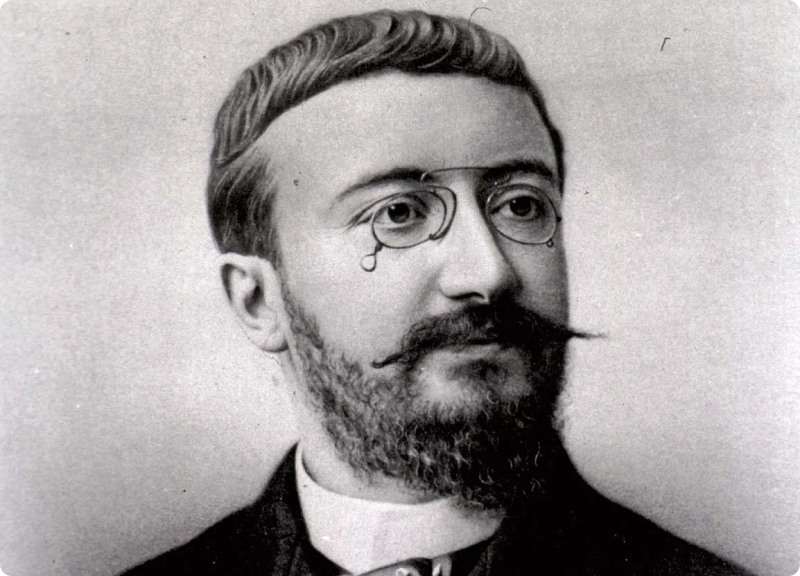
Binet believed intelligence was not fixed and could be improved with education!
1916
The Birth of the Modern IQ Score
The Stanford-Binet Test & the IQ Formula
The Stanford-Binet Test & the IQ Formula
In 1916, American psychologist Lewis Terman refined Binet’s test and introduced the Stanford-Binet Intelligence Scale. He also created the first IQ formula:
IQ = (Mental Age ÷ Actual Age) × 100
IQ = (Mental Age ÷ Actual Age) × 100
How it worked:
- Standardized IQ scoring (100 as the average IQ)
- Used in schools and military recruitment
- Became the foundation for modern IQ tests
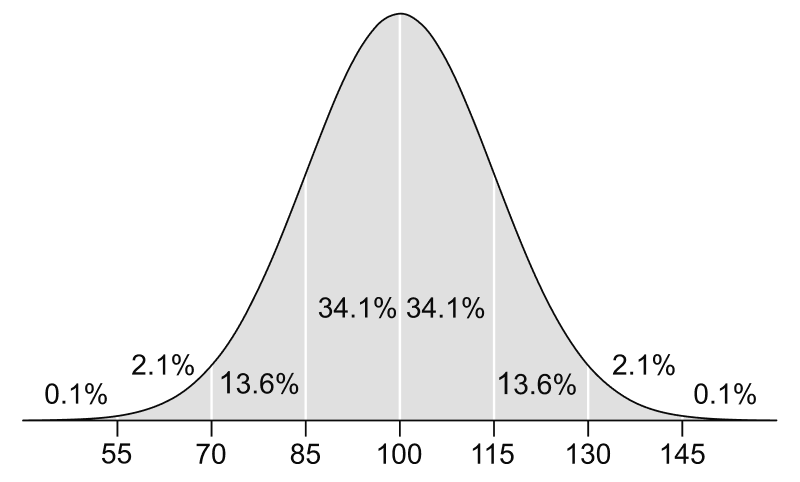
Today, the average IQ score worldwide is between 85-115, with only 2% of people scoring above 130 (genius level).
The Evolution of IQ Testing
Today’s IQ tests are more advanced and fairer, measuring:
- Logical reasoning
- Memory
- Problem-solving skills
- Processing speed
Modern IQ Tests Used Today:
- Wechsler Adult Intelligence Scale (WAIS)
- Raven’s Progressive Matrices
- Mensa IQ Test
Want to know your IQ? Take the test now!